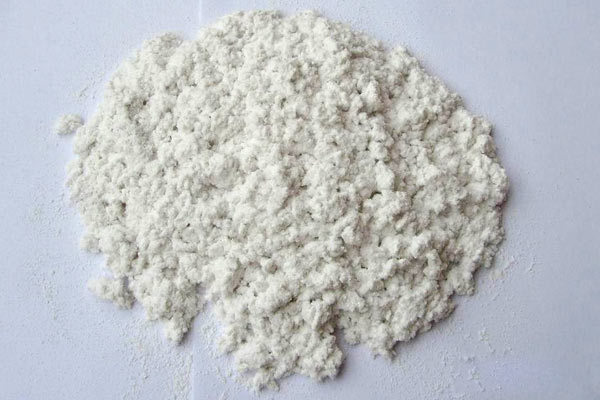
Why are wood fibers added to mortar?
Release Time:
2021-04-27
Source:
Due to the capillary action of the fibrous structure, moisture within the system is rapidly transported to the slurry surface and interface, resulting in a more uniform distribution of internal moisture and a significant reduction in skin formation. This also leads to a marked improvement in bond strength and surface strength, while the reduced tensile stress during drying further enhances crack resistance. The dimensional stability and thermal stability of wood fibers contribute significantly to the thermal insulation and crack resistance of insulating materials. Wood cellulose is insoluble in water, weak acids, and alkaline solutions; it has a neutral pH, which can enhance the system’s corrosion resistance.
Cellulose fibers have low bulk density and a large specific surface area, imparting excellent thermal insulation, heat resistance, sound insulation, electrical insulation, and breathability. They exhibit uniform thermal expansion without cracking or flaking, as well as superior wet-film strength and coverage. Moreover, cellulose fibers boast outstanding flexibility and dispersibility; upon blending, they form a three-dimensional network structure that enhances the system’s structural support and durability, thereby improving its stability, strength, compactness, and uniformity.
The structural viscosity of wood fibers helps maintain the homogeneity of processed precast slurries (both dry and wet mixes) in their original state, while reducing system shrinkage and expansion, thereby significantly improving the dimensional accuracy of construction work and prefabricated components. Wood fibers also exhibit excellent freeze–thaw and thermal insulation properties: they can provide thermal insulation for several days at 150°C, for dozens of hours at 200°C, and for several hours even above 220°C.
Wood Fiber Application in Wall Mortar Finish Coats
1. Fiber-reinforced skim coat mortar is applied to the wall finish layer, effectively preventing cracking and achieving crack resistance and impermeability.
2. The fiber-reinforced mortar finish exhibits excellent workability and ease of finishing, with no adverse impact on the appearance of the mortar surface.
3. Fiber reinforcement can effectively address the technical shortcomings of new lightweight wall materials to the greatest extent possible. All types of lightweight, energy-efficient wall materials exhibit varying degrees of surface cracking and inadequate impermeability, which hinder their widespread adoption and application. When these wall materials are used, incorporating companion fiber-reinforced mortar as the finishing plaster layer can fully compensate for their performance deficiencies, thereby helping to improve construction quality.
Wood Fiber Applications in Gypsum-Based Plasters and Gypsum Products
1. Enhances homogeneity, making the plaster mortar easier to apply while improving its resistance to sagging. It also improves flowability and pumpability, thereby increasing work efficiency.
2. High water-retention capability, which extends the workability of the mortar and develops high mechanical strength during setting.
Wood Fiber Application in the Base Layer of Thermal Insulation Mortar
1. Fiber-reinforced mortar ensures that the base coat and skim-coat layers of mortar are firmly bonded, aesthetically pleasing, and smoothly finished, making it suitable for use with a wide range of architectural coatings. With the increasingly widespread application of various exterior wall coatings, higher performance requirements have been placed on construction mortars. Fiber-reinforced mortar, owing to its excellent crack resistance, impact resistance, and freeze-thaw durability, can significantly enhance the engineering properties of mortars, meet all construction-process requirements, and fundamentally guarantee construction quality.
2. Enhance plastering efficiency and reduce material waste. Fiber-reinforced mortar exhibits superior adhesion and stability compared with plain cement mortar, making it easier to apply and significantly reducing slump loss during application, thereby improving plastering efficiency and minimizing material wastage.
3. It helps ensure the construction quality of the facing tile finish. When fiber-reinforced mortar is used as the base layer, the reduction or near elimination of cracking plays a crucial role in guaranteeing the bond strength of the facing tiles and preventing crack formation and hollowing in the tile joints.