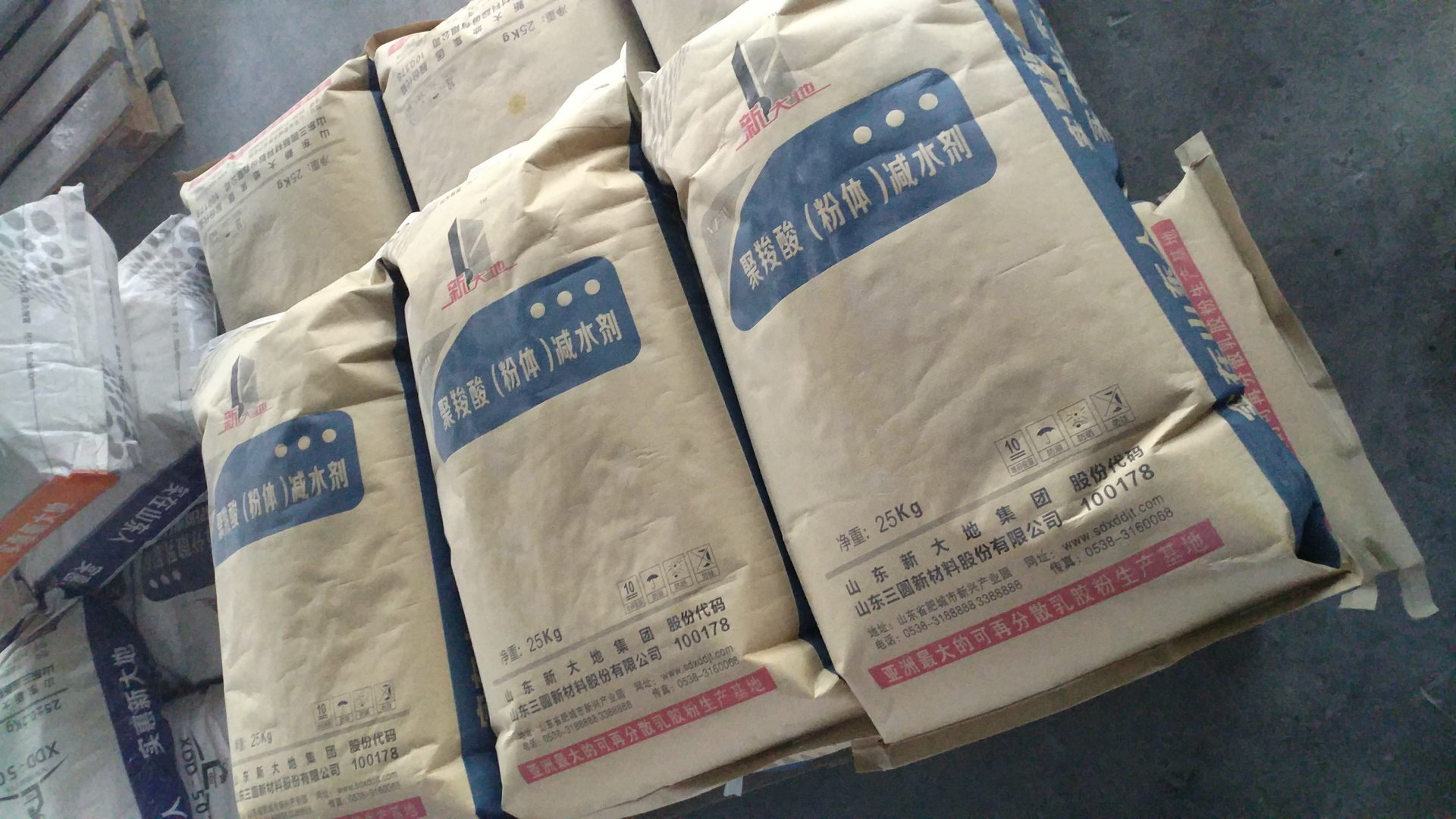
Characteristics of Powdered Polycarboxylate Superplasticizer
Release Time:
2021-04-09
Source:
Polycarboxylate-based high-performance water reducers are predominantly in liquid form, with complex powdering processes and inherent safety risks during production. Consequently, they are mainly marketed in liquid form. However, recent advances in technology and improvements in powdering techniques have made powdered polycarboxylate-based high-performance water reducers increasingly common. Compared with their liquid counterparts, powdered formulations offer significant logistical and operational advantages—from transportation to on-site application—thereby establishing powder form as the prevailing trend in the development of this product category.
Powdered polycarboxylate superplasticizer exhibits the following characteristics compared with conventional liquid polycarboxylate admixture products:
1. Can be widely used in dry-mix products, ceramics, coatings, gypsum products, refractory materials, and other building materials.
2. Facilitates long-distance transportation and reduces storage space.
3. High water-reducing rate: the water-reducing rate can reach 30%.
4. Low dosage: 0.1%–0.3%
5. High early strength: Concrete 3-day strength can increase by 100%–400%.
6. Effectiveness at low water-to-cement ratios: Under a water-to-cement ratio of 0.15, ultra-high-strength concrete with high compressive strength can be produced.
7. Environmentally friendly product: The production process of this product does not generate any pollution to the natural environment and complies with national standards.
Main Properties of Powdered Polycarboxylate Superplasticizer
1. Apparent Performance Metrics
⑴ At low dosages, it exhibits excellent dispersibility and fluidity for cement;
(2) When the dosage exceeds 0.12% but does not exceed 0.22%, the flowability of the paste increases markedly;
(3) The 1-hour slump loss of the neat paste decreases with increasing dosage.
2. Mortar Performance
(1) The mortar water-reducing ratio is consistently correlated with the paste flowability: the greater the paste flowability, the higher the mortar water-reducing ratio.
(2) The water-reducing rate increases rapidly with increasing dosage and remains relatively high.
(3) The water-reducing ratio of concrete incorporating a water-reducing admixture often differs from that of mortar due to the influence of supplementary cementitious materials and the properties of aggregates. When the supplementary cementitious materials and aggregates are conducive to concrete workability, the concrete’s water-reducing ratio is higher than that of the mortar; conversely, it is lower.