Construction Process for Applying Putty
Release Time:
2020-12-10
Source:
Construction Process for Applying Putty
I. Construction Requirements:
2 Construction Requirements
1. The substrate shall be solid, clean, generally smooth, and free of sewage and oil stains; its strength shall be greater than or comparable to that of the putty.
2. Internal and external corners shall be properly detailed in advance, and joints and cracks shall be treated for crack resistance to meet the requirements of the relevant codes and standards.
3. For substrates with high water absorption, the surface should be sprayed with clean water or a glue-based primer to seal the substrate before applying putty after it has been adequately moistened.
New wall
1. Sweep away loose dust and residual mortar
2. Use a wool roller brush dipped in clean water to moisten the wall surface.
Old wall
1. Use a roller brush dipped in clean water to moisten the wall surface.
2. Use a trowel to remove the existing paint from the wall.
3. Use a wool roller brush dipped in clean water to moisten the wall surface.
4. For large wall surfaces with unevenness, cement mortar shall be used for leveling.
II. Construction Process Flow:
Add the interior wall putty powder to clean water at a ratio of approximately 1:2, let it soak for 15 minutes, then thoroughly mix with an electric drill.
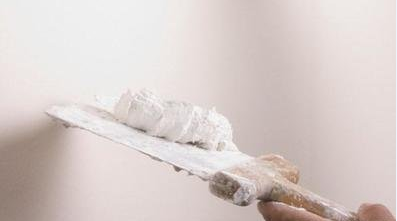
Use a scraper and trowel to apply the prepared slurry onto the working surface, ensuring that the number of coats is kept to a minimum while striving for uniformity and smoothness, with no visible joint marks. The primary objective is to achieve a level base surface.
After the first coat has been applied and allowed to dry completely, carefully sand it with medium-to-coarse grit sandpaper, sweep away any loose dust, and then apply a second coat. The thickness of this second coat should be about 3 mm, with the primary purpose of achieving a fine, even surface finish.
After it has completely dried, carefully sand the surface with fine-grit sandpaper to prepare it for applying interior latex paint.
To achieve a smooth, glossy finish, at the end of the second coat, once the putty has dried to about 60–70% moisture content, use a steel trowel to float and polish the surface.
III. Precautions
1. When mixing, the powder should be added to the water; water should not be added to the powder.
2. The prepared slurry must be used up within 3 hours.
3. In principle, the thickness of the second coat of putty should not exceed 3 mm. If significant surface defects necessitate a greater thickness, multiple coats may be applied, or fine sand may be added at a weight ratio of 1:1 relative to the dry powder.
4. The temperature at the construction site should preferably be above 5°C.
5. Avoid applying this product concurrently with oil-based polyesters or polyurethane paints.
6. Walls with severe alkali efflorescence or visible standing water shall not be directly constructed; they must first undergo special treatment and pass inspection before work can proceed.
7. When the climate is excessively dry or windy, protective measures should be implemented (e.g., prohibiting ventilation and regularly sprinkling water on the ground) to enhance…
8. Curing of the putty: prevent rapid moisture evaporation that could lead to cracking and powdering, and apply a water coat once after 24 hours.
Upon completion of construction, promptly clean the material buckets and tools to prevent residual slurry from hardening and becoming difficult to remove.